Groundwater Protection Rule: Farmer Public Comment Letter
The Minnesota Department of Agriculture (MDA) is currently accepting public comments as part of its review of the Groundwater Protection Rule (GPR). The Irrigators Association of Minnesota encourages farmers who irrigate crops to participate in this process by submitting a written comment in support of the existing, science-based rule.
Click the following link to download the template letter.
The Groundwater Protection Rule has been in place since 2019 and has already led to meaningful improvements in fertilizer timing, nitrogen management, and groundwater protection across Minnesota. Data from monitoring programs, including private well networks, show positive trends in nitrate levels over time. Continued implementation of the current rule allows these improvements to build while maintaining flexibility for farmers to use proven, site-specific practices.
Why This Letter Matters
Public comments are an important part of MDA’s decision-making process. Farmer voices help ensure that real-world experience, on-farm stewardship, and existing conservation efforts are considered as the agency evaluates potential changes to the rule.
This letter is intended to:
- Share firsthand experience from irrigated farms
- Highlight existing nutrient management and irrigation practices already in use
- Support continued implementation of the current Groundwater Protection Rule
- Encourage science-based, targeted approaches rather than broad new restrictions
How to Use the Letter Template
- Download the farmer letter template using the button below.
- Personalize the letter by filling in your name, county, farm details, and the conservation and nutrient management practices you use on your operation.
- Send the completed letter to the Minnesota Department of Agriculture using the mailing or email address provided in the template.
- Make sure your comment is submitted before the deadline.
Click the following link to download the template letter.
🚨 PUBLIC COMMENT DEADLINE: THURSDAY, MARCH 12, 2026
All comments must be received by the Minnesota Department of Agriculture by this date to be considered.
Submitting a comment helps ensure that the perspective of irrigating farmers is represented in this review. Taking a few minutes to personalize and send this letter is a simple but effective way to support responsible nutrient management, groundwater protection, and the long-term sustainability of irrigated agriculture in Minnesota.
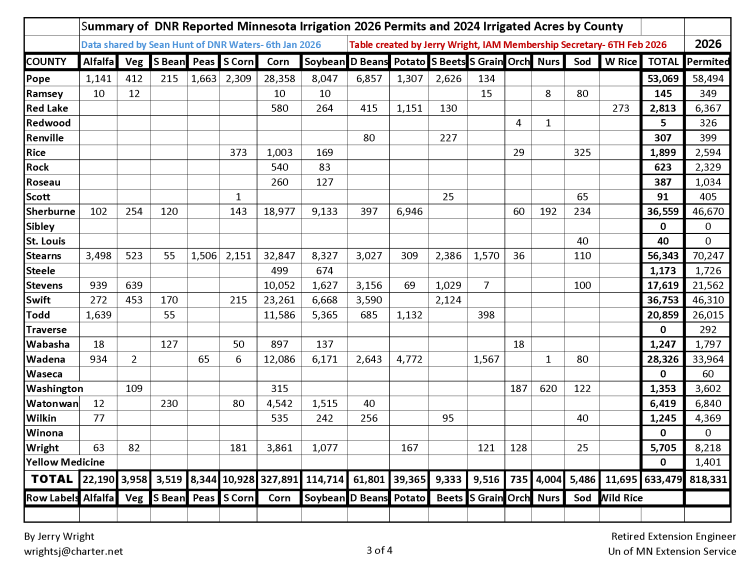
2026 Permits and 2024 Irrigated MN Acres Reported by Farmers to DNR
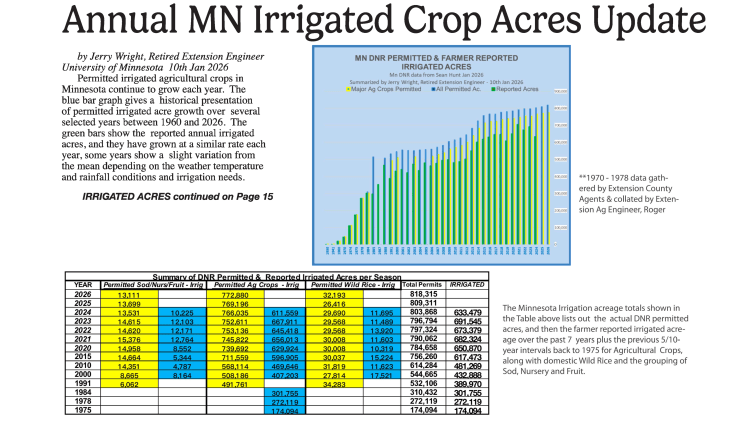
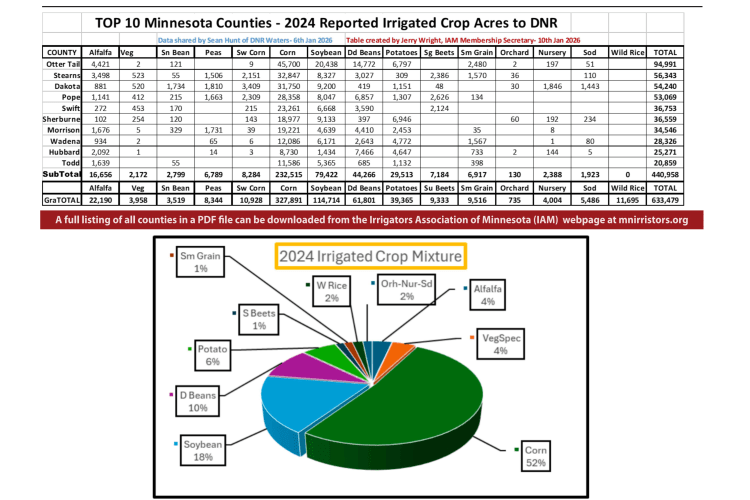
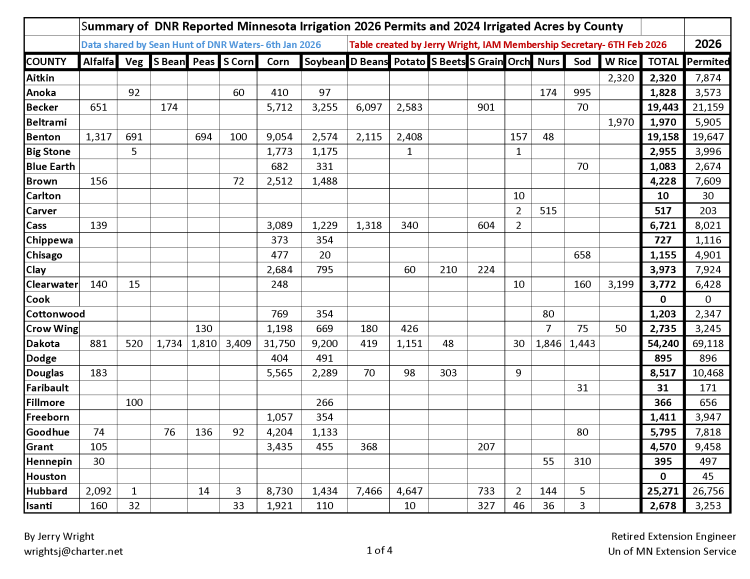
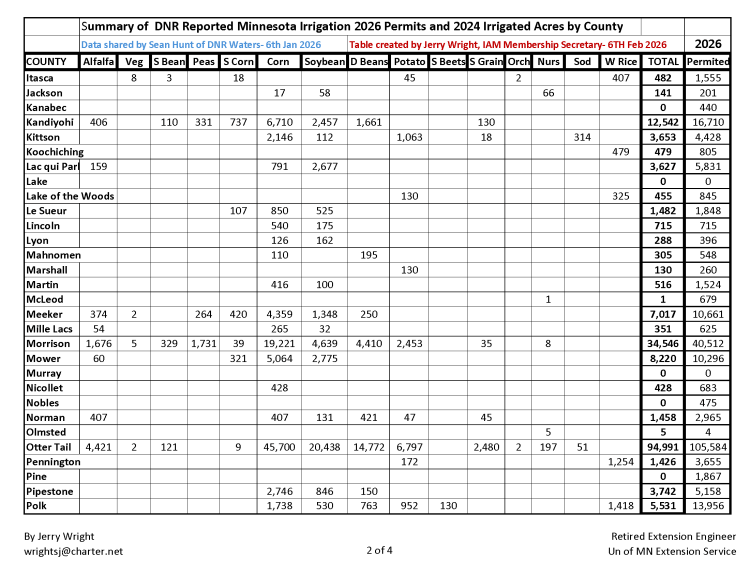
Minnesota Irrigation Continues to Play a Critical Role in Crop Production
Newly compiled data from the Minnesota Department of Natural Resources (DNR) highlights the scale, diversity, and geographic reach of irrigated agriculture across Minnesota heading into the 2026 permit year.
The summary, prepared by retired University of Minnesota Extension irrigation engineer Jerry Wright using DNR data shared by Sean Hunt of Minnesota Department of Natural Resources Waters, provides a county-by-county snapshot of irrigated acres and permitted irrigation activity based on 2024 crop acreage and 2026 water use permits.
Statewide Irrigation at a Glance

Across Minnesota, irrigated agriculture accounts for:
- 633,479 irrigated acres
- 818,331 total acres under irrigation permits
Field corn continues to dominate irrigated crop acres statewide, followed by soybeans, potatoes, dry edible beans, and specialty crops such as vegetables, sugar beets, and nursery stock. While row crops make up the largest share, the data reinforces the importance of irrigation for high-value specialty crops that depend on consistent water availability.
Regional Concentrations Reflect Soil and Crop Systems
Irrigation intensity varies widely by county, reflecting differences in soil type, cropping systems, and climate conditions.
Counties such as Otter Tail, Stearns, Dakota, Sherburne, Pope, Morrison, and Wadena rank among the highest in total permitted irrigated acres. Central and west-central Minnesota continue to show strong irrigation adoption tied to sandy soils and diversified crop rotations, while pockets of irrigation persist in southern and northern counties where specialty crops and localized soil conditions warrant supplemental water.
Crop Diversity Highlights Irrigation’s Flexibility
The report documents irrigation across more than a dozen crop categories, including:
- Field and sweet corn
- Soybeans
- Potatoes
- Dry edible beans
- Sugar beets
- Vegetables
- Alfalfa and small grains
- Nursery, sod, and wild rice
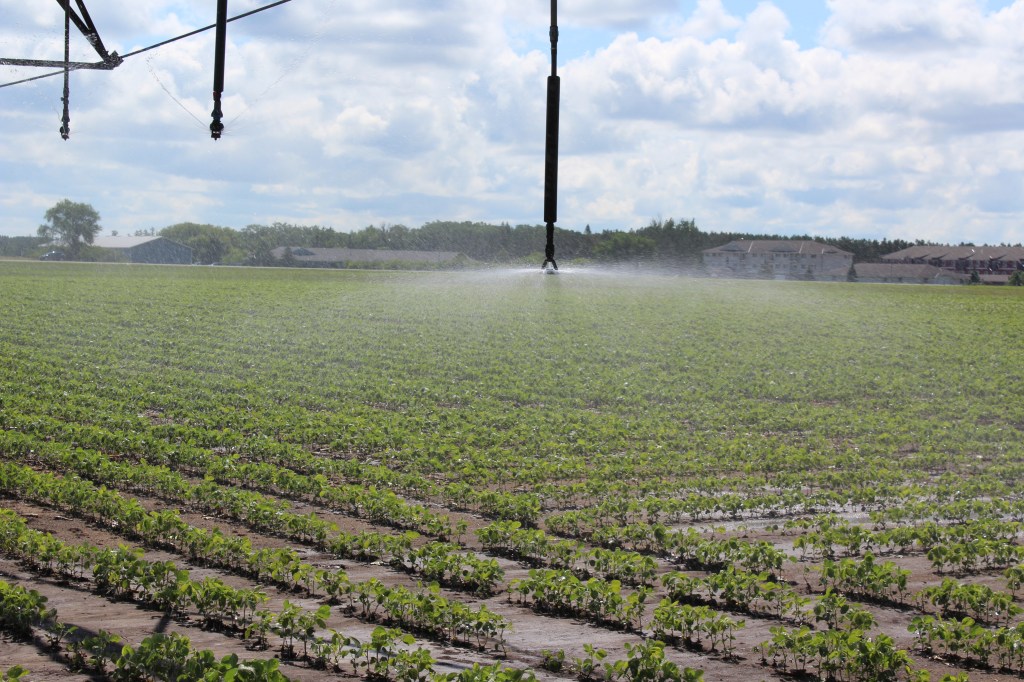
This diversity underscores irrigation’s role not only in yield protection but also in supporting specialty crop production, crop quality, and market stability.
Long-Term Growth with Modern Management
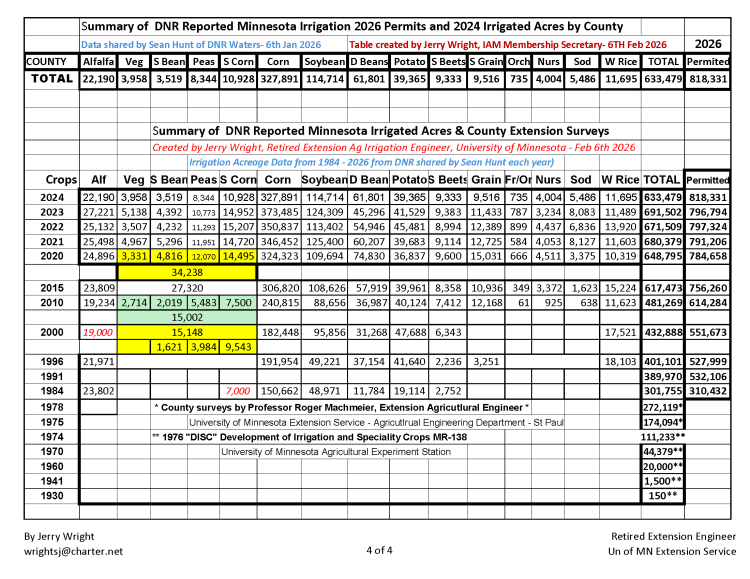
Historical data included in the report shows steady growth in irrigated acres since the mid-20th century, with significant expansion beginning in the 1970s and accelerating through the 1990s and 2000s. While annual totals fluctuate based on weather and markets, irrigation remains a long-term investment for Minnesota farms.
At the same time, irrigation practices have evolved. Modern systems emphasize efficiency, scheduling, and nutrient management, aligning water use with crop demand while protecting groundwater resources.
Informing Policy and Planning
This data provides important context as Minnesota continues discussions around water use, conservation practices, and agricultural regulation. Understanding where irrigation occurs, what crops depend on it, and how acreage has changed over time helps ensure future policies remain practical, science-based, and regionally appropriate.
The summary was compiled by Jerry Wright, IAM Membership Secretary, using annual DNR irrigation acreage data dating back to 1984, in collaboration with the University of Minnesota Extension and the Irrigators Association of Minnesota.
Minnesota Irrigators: See Your Potential New Costs with the IAM Excel Calculator
The Irrigators Association of Minnesota (IAM) has created a simple Excel spreadsheet to help you calculate how the proposed $60 per permit fee increase could impact your operation.
How to use it:
- Download the spreadsheet from the IAM website.
- Enter your total number of irrigation permits.
- Enter your total number of irrigated acres.
The calculator will automatically show:
- Your new estimated fees if the $60 increase is approved.
- The added cost per acre to your farm.
Why use it?
This tool gives you a quick, personalized look at how the proposed changes could affect your bottom line — helping you stay informed and ready to take action.
Alan Peterson Agricultural Scholarship
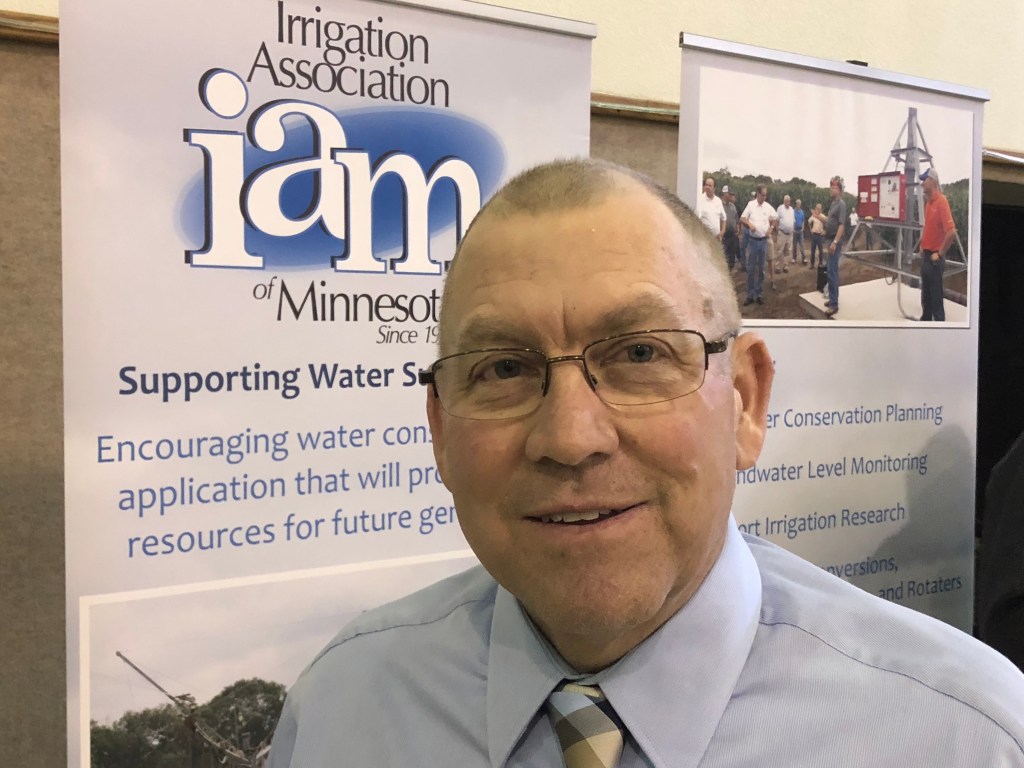
The Alan Peterson Agricultural Scholarship serves to Respect natural resources, Embrace innovation, Advocate for agriculture at local, regional and national levels, Protect irrigated production agriculture and Promote research.
Alan Peterson lived and farmed in Sherburne County his entire life. He proudly served as a member of many agricultural boards at the local, county, and state levels and was president of the Irrigators Association of Minnesota for 18 years. One of his many passions was advocating for irrigation in the sandy soils of central Minnesota. He enjoyed communicating with farmers regarding irrigation questions and concerns. He was open to innovative practices that would increase crop productivity.
2023 Recipients


Congratulations to Natalie Beckendorf and Tyler Ratka, on being awarded one of two $2000.00 IAM Alan Peterson Agricultural Scholarships. Both aspiring scholars are set to embark on their academic journey at the University of Minnesota in the Twin Cities.
Established with the vision of fostering excellence and commitment in the field of agriculture, the Alan Peterson Agricultural Scholarship serves to respect natural resources, embrace innovation, advocate for agriculture at local, regional and national levels, protect irrigated production agriculture and promote research. By embodying the scholarship’s core values, Natalie and Tyler exemplify the spirit of agricultural stewardship and leadership.
Read more about past recipients here.
Research Farms in Minnesota
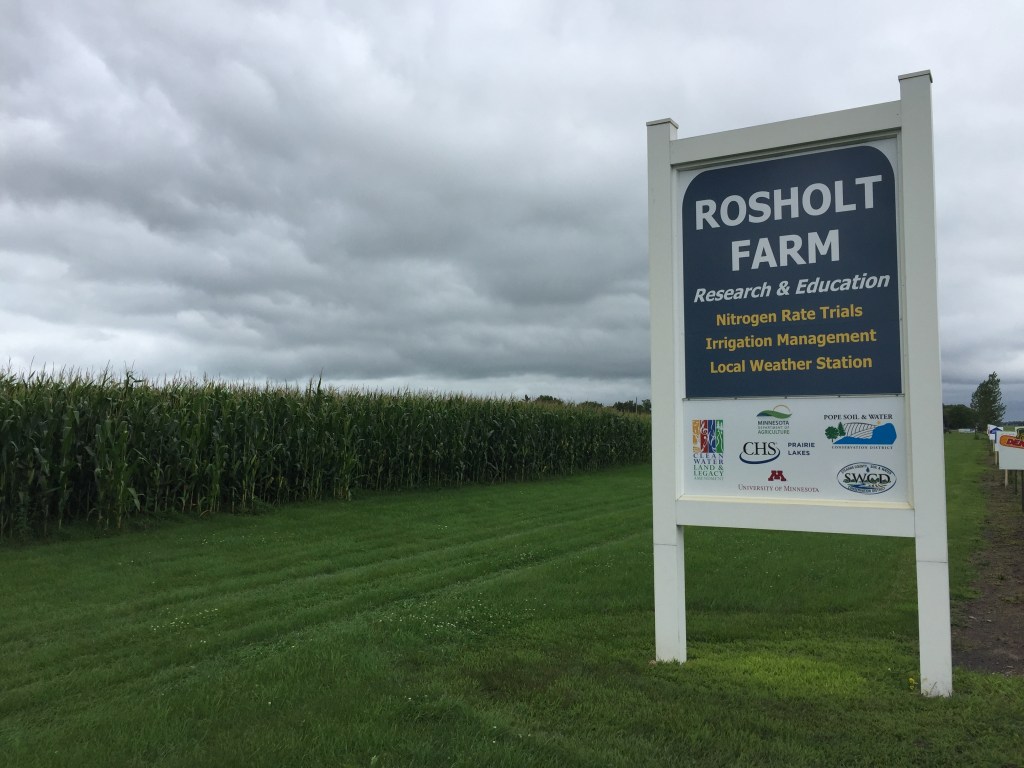

University Irrigation Crop Management Research
University of Minnesota Extension
University of Wisconsin Extension
University of Nebraska Extension
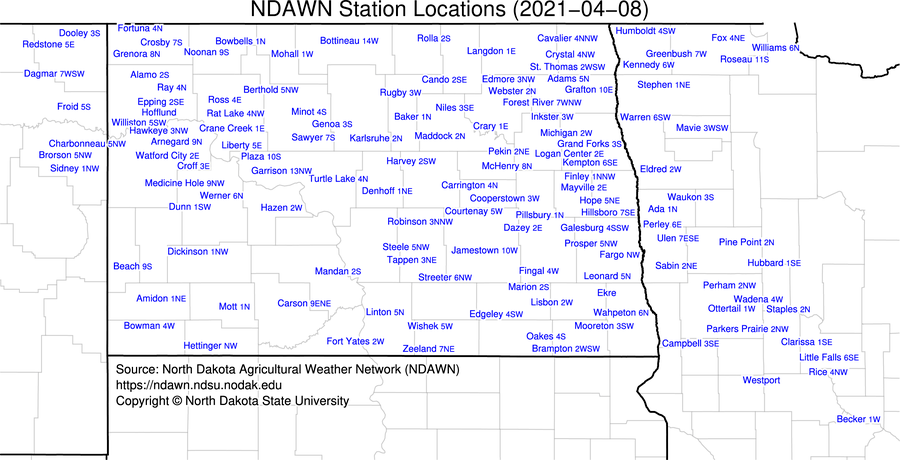
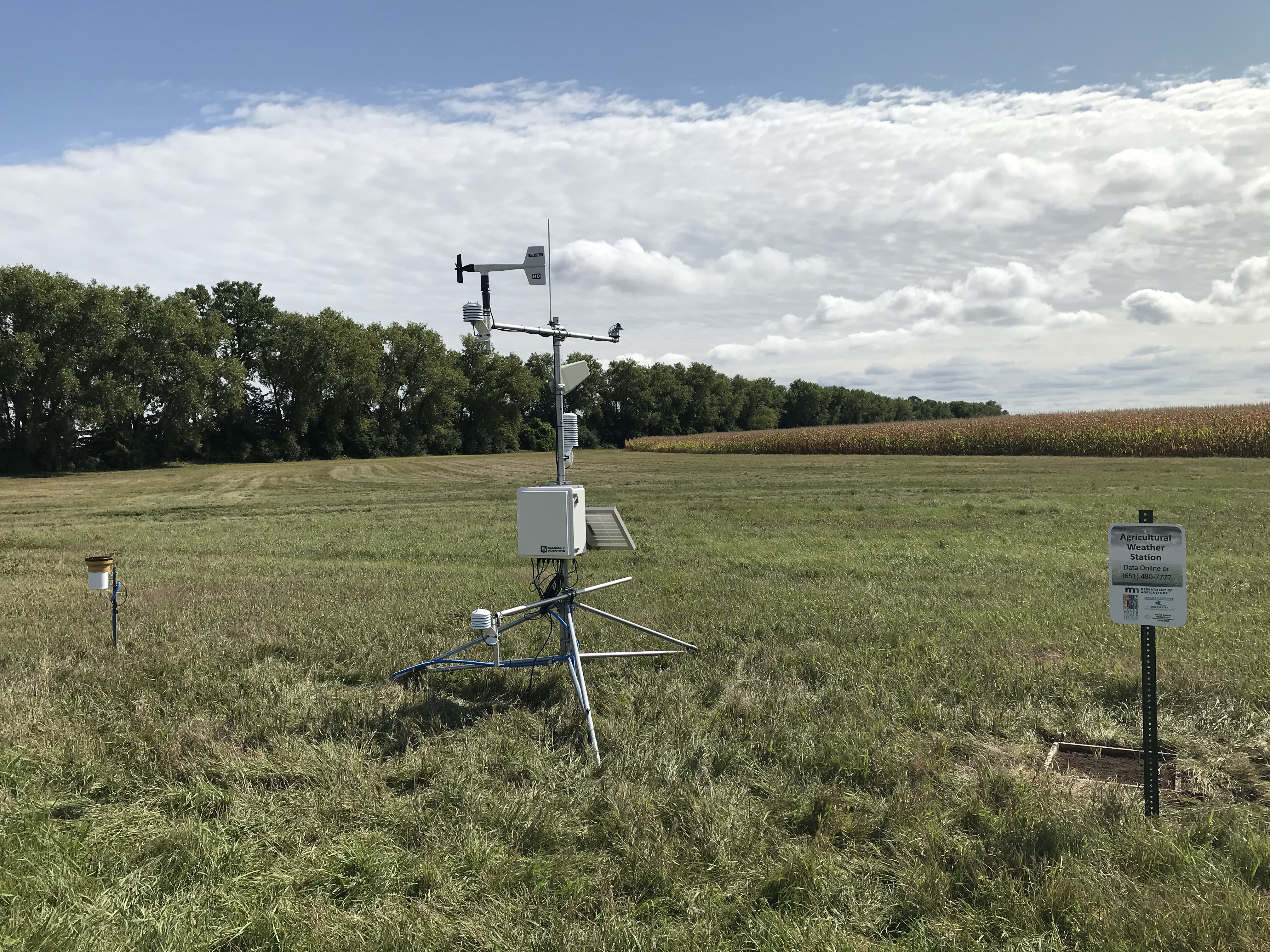
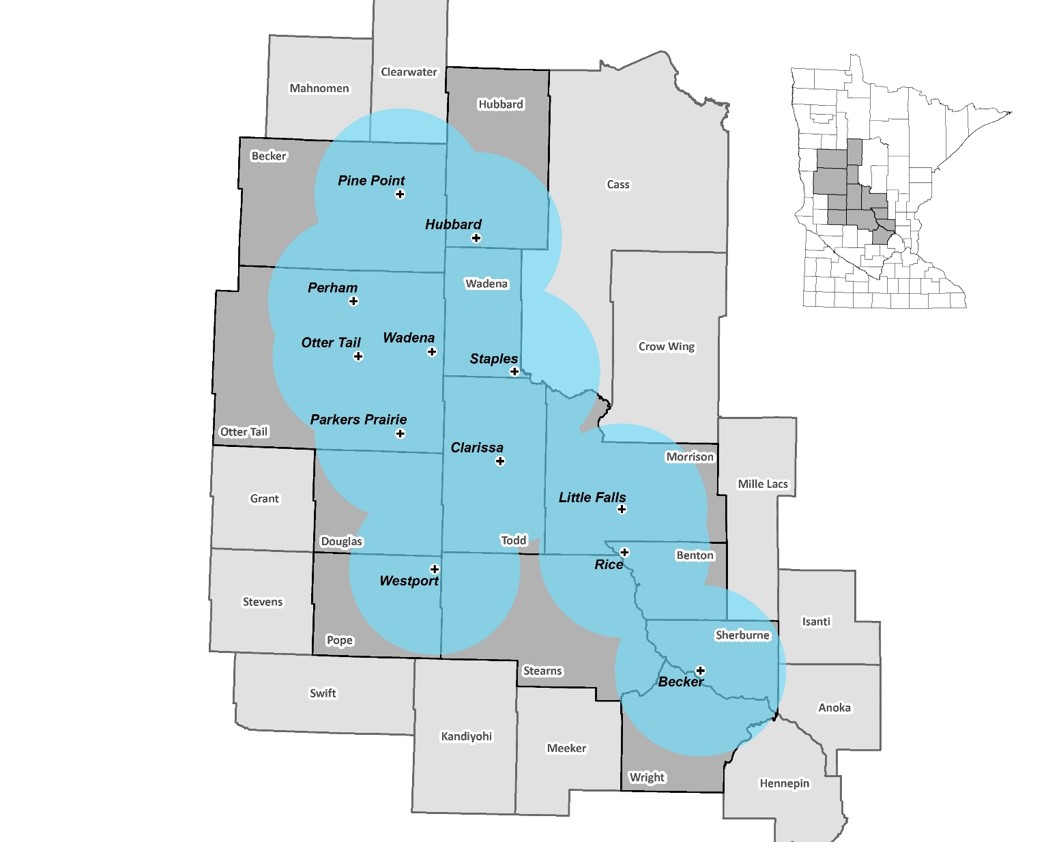
Minnesota Agricultural Weather Network
- Daily Rainfall
- Air Temperature (Max/Min)
- Air Humidity (Max/Min)
- Wind Speed (Max/Min) and Direction
- 4-inch Bare Soil and Turf Temperature
- Solar Radiation and Avg. Dew Point
Go to Weather Station Data
 IAM
IAM 