Newly compiled data from the Minnesota Department of Natural Resources (DNR) highlights the scale, diversity, and geographic reach of irrigated agriculture across Minnesota heading into the 2026 permit year.
The summary, prepared by retired University of Minnesota Extension irrigation engineer Jerry Wright using DNR data shared by Sean Hunt of Minnesota Department of Natural Resources Waters, provides a county-by-county snapshot of irrigated acres and permitted irrigation activity based on 2024 crop acreage and 2026 water use permits.
Statewide Irrigation at a Glance
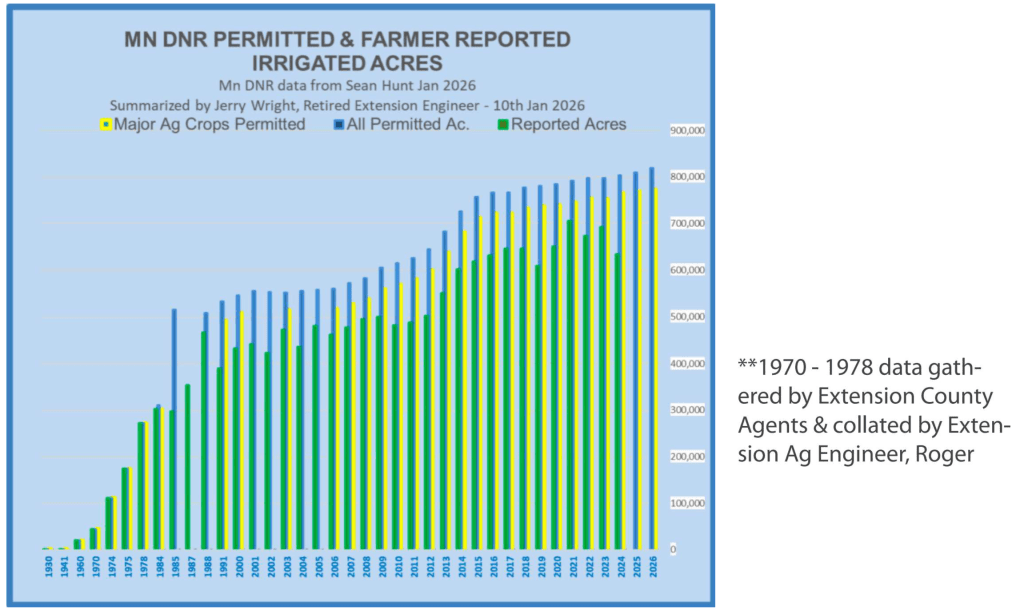
Across Minnesota, irrigated agriculture accounts for:
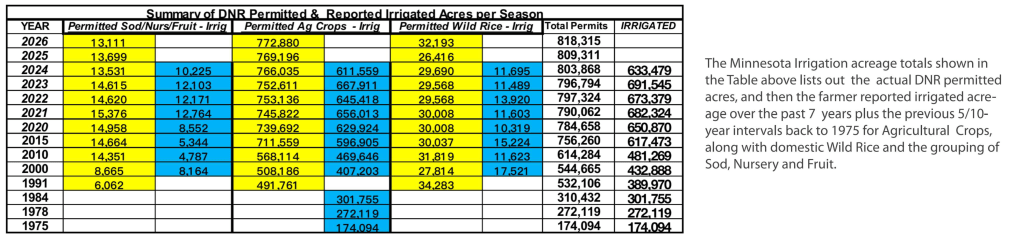
- 633,479 irrigated acres
- 818,331 total acres under irrigation permits
Field corn continues to dominate irrigated crop acres statewide, followed by soybeans, potatoes, dry edible beans, and specialty crops such as vegetables, sugar beets, and nursery stock. While row crops make up the largest share, the data reinforces the importance of irrigation for high-value specialty crops that depend on consistent water availability.
Regional Concentrations Reflect Soil and Crop Systems
Irrigation intensity varies widely by county, reflecting differences in soil type, cropping systems, and climate conditions.
Counties such as Otter Tail, Stearns, Dakota, Sherburne, Pope, Morrison, and Wadena rank among the highest in total permitted irrigated acres. Central and west-central Minnesota continue to show strong irrigation adoption tied to sandy soils and diversified crop rotations, while pockets of irrigation persist in southern and northern counties where specialty crops and localized soil conditions warrant supplemental water.
Crop Diversity Highlights Irrigation’s Flexibility
The report documents irrigation across more than a dozen crop categories, including:
- Field and sweet corn
- Soybeans
- Potatoes
- Dry edible beans
- Sugar beets
- Vegetables
- Alfalfa and small grains
- Nursery, sod, and wild rice
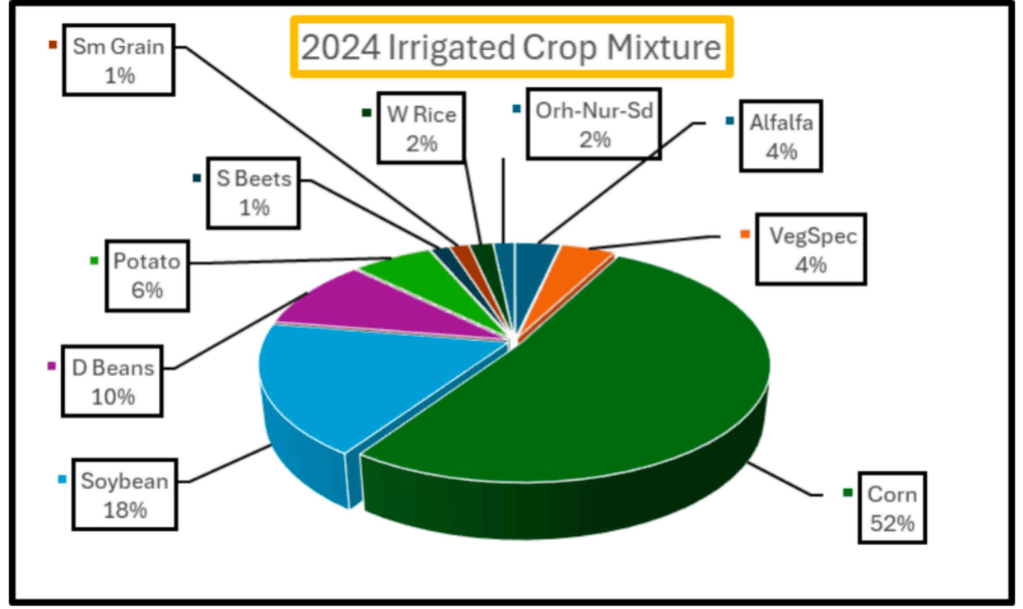
This diversity underscores irrigation’s role not only in yield protection but also in supporting specialty crop production, crop quality, and market stability.
Long-Term Growth with Modern Management
Historical data included in the report shows steady growth in irrigated acres since the mid-20th century, with significant expansion beginning in the 1970s and accelerating through the 1990s and 2000s. While annual totals fluctuate based on weather and markets, irrigation remains a long-term investment for Minnesota farms.

At the same time, irrigation practices have evolved. Modern systems emphasize efficiency, scheduling, and nutrient management, aligning water use with crop demand while protecting groundwater resources.
Informing Policy and Planning
This data provides important context as Minnesota continues discussions around water use, conservation practices, and agricultural regulation. Understanding where irrigation occurs, what crops depend on it, and how acreage has changed over time helps ensure future policies remain practical, science-based, and regionally appropriate.
The summary was compiled by Jerry Wright, IAM Membership Secretary, using annual DNR irrigation acreage data dating back to 1984, in collaboration with the University of Minnesota Extension and the Irrigators Association of Minnesota.
Click the link to view and download the full report.
 IAM
IAM 